
Deed Types in Clarke County
Recording a deed with the Clarke County Clerk of Superior and State Courts makes the filing official. It names the parties and describes the land. The label tells you little. Legal effect comes from the full instrument, not from one index line. Mortgages, liens, plats, and PT-61 forms often sit beside the ownership trail in Clarke County. Each answers a different question.
| Deed Type | What It Does | Common Use |
|---|---|---|
| Warranty deed | Conveys the stated interest with written title promises | Ordinary sale |
| Quitclaim deed | Conveys whatever interest the grantor holds | Family transfer or title cleanup |
| Executor or trustee deed | Transfers through a fiduciary with legal authority | Estate or trust |
| Tax deed | Documents a tax-sale conveyance | Delinquent-tax property |
| Security deed | Secures debt against land | Mortgage financing |
The grantor conveys the interest. The grantee receives it. A security deed or lien can burden land without changing who the latest conveyance shows as holder. Read the deed image and any later releases rather than treating one Clarke County deed index line as the whole record.
Clarke Kofile Search Controls
Kofile QuickLinks gives Clarke County researchers two routes. One is an index search, and the other is a known-document search. The index filters by type, year, parties, last name, and first name. The document route takes a book and volume first. A page number completes it. The last-name tool opens a first-letter group. Available first names then narrow that group.
| Control | Index Function | Best Clue |
|---|---|---|
| Type and year | Selects a series and period | Transfer date |
| Parties | Chooses an indexed role | Buyer or seller |
| Last and first name | Narrows the party list | Name variants |
| Book, volume, page | Retrieves a cited document | Parcel card citation |
Paging controls move you through a surname group. Click any line for detail or an image path. Save the spelling, role, index year, book, volume, and page so the search can be repeated at the Clerk if remote access fails.
Clarke Deed Index Depth
The Clarke Kofile landing page lists a General Index to Deed Books covering 1801 through 1984. Clarke County was created in 1801. The index reaches the county's start. That span describes coverage only. It promises neither every image online nor any later years.
Older deeds may demand a physical book, local microfilm, or Georgia Archives material. Some volumes went unfilmed. Clarke also lists books bearing a microfilm stamp with no microfilm copy present. A missing image is a reason to ask for the cited volume at the courthouse. It is not proof that no record exists.
Note: Record the index series and access date when a deed search stops before the year or image needed.
Trace Clarke County Title
A chain of title links every conveyance for the same land. Start with the newest sound deed citation. An address or map code can lead to the parcel card. The card then shows its latest book and page. From there, the grantor-grantee index turns one transfer into the next link.
- Find the deed on which the present holder appears as grantee. Match the legal description, map code, subdivision, or earlier citation.
- Read the grantor's name exactly. Save initials, entity endings, trustee terms, and alternate spellings.
- Search that grantor as a prior grantee. Repeat while carrying the land description through each link.
- When online coverage ends, take the citation to the Clerk, older deed books, microfilm, or Archives.
- Grantor
- The party conveying the stated interest.
- Grantee
- The party receiving that interest.
- Chain of title
- The linked run of recorded transfers for the land.
- Book and page
- The volume citation used to retrieve a filing.
- Instrument number
- A separate filing identifier used in some records.
GSCCCA Clarke Deed Records
The GSCCCA Real Estate Index complements Kofile for Clarke County deed records. Search fields include name, county, date range, party type, instrument type, subdivision, unit, block, lot, and book and page. Results identify names, location, and citations. Images appear where available.
The statewide view helps when a person or entity recorded instruments in more than one Georgia county. A free limited account covers search and summary data without images. Paid tiers and single-use access govern some images. The Clarke County Clerk remains the official local custodian.
The official GSCCCA description shows the statewide route.
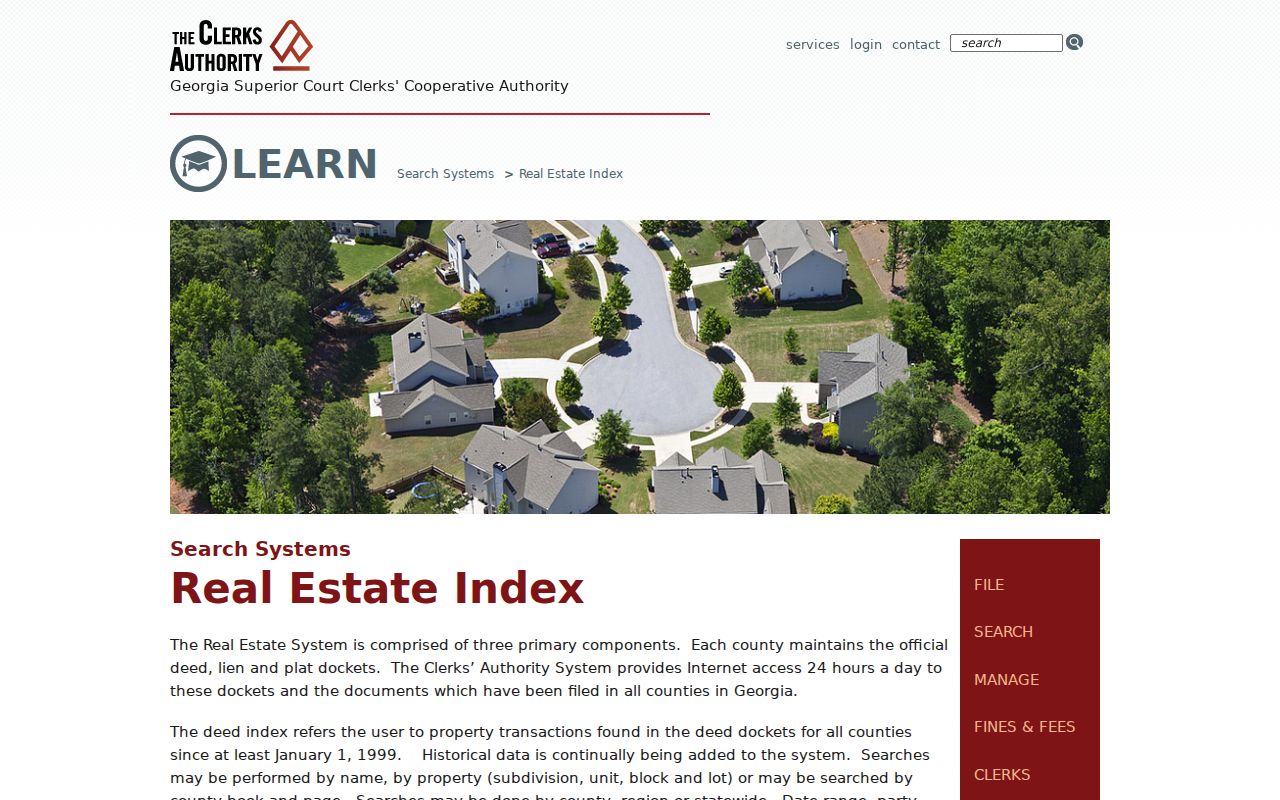
It suits checking a local citation against the statewide index.
Clarke Deed Images and Printing
Kofile distorts its remote images. The distortion is an anti-copy control. Buying an image removes it. Remote users can add images to a cart, create or use an account, and pay by credit or debit card. On county premises, printing runs through county equipment or Wi-Fi rather than a researcher's own remote printer. The Kofile help page documents the image, cart, account, and print flow.
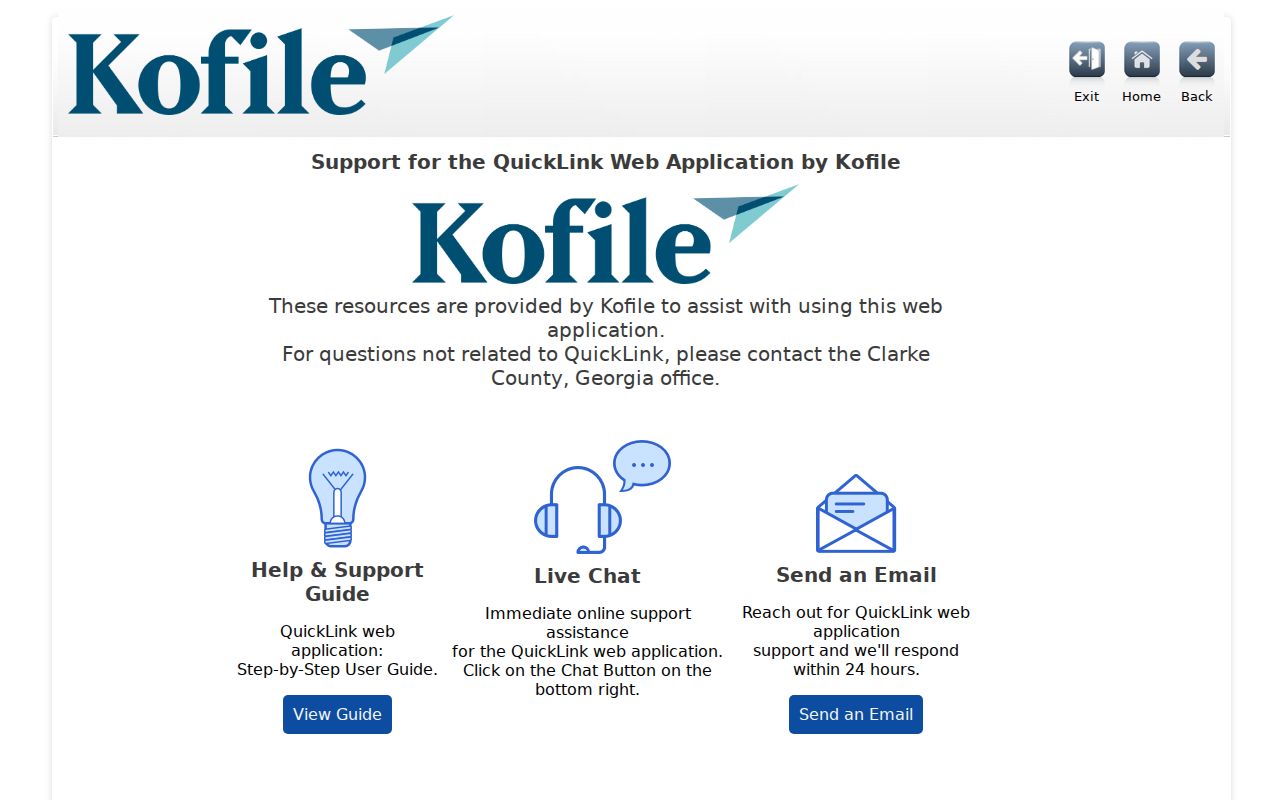
An index entry can locate a filing. A clear image is still needed to read signatures or the complete legal description.
Names Within Clarke Deeds
A transfer may be indexed under an individual, executor, trustee, estate, or entity. Names vary. Try initials. Try full given names too. Keep the main business name while testing an LLC suffix or abbreviation. The document should confirm why the named party had authority to convey.
Estate transfers can break a neat buyer-to-seller chain. Probate petitions, inventories, appraisements, and land-sale orders may explain the next Clarke County deed. Heir relationships may explain it as well. Those records live in Probate Court or historic collections, not the deed index alone.
Plats Behind Clarke Deeds
A deed may describe land by subdivision, lot, block, plat book, or metes and bounds. The plat supplies a mapped legal framework. The deed conveys the interest. ACC guidance directs users to find an address in QPublic, inspect sales data for a plat book and page, and obtain the plat or deed at the courthouse. A neighborhood label is not always a legal subdivision. Preserve the exact citation.
The Clarke County parcel maps workflow explains why a GIS map helps orient the tract while the recorded plat remains the stronger boundary source.
Clarke Historic Land Trail
Long before parcel numbers existed, land in Clarke County lived in deed books and tax digests. It also lived in probate records and court files. The old digests run 1800 to 1899 and 1900 to 1935. They are grouped by militia district and family name. Will books open with Book A, covering 1802 to 1822. A researcher can use these records to trace an estate transfer. They can also pin down an old place description.
Maps, city directories, newspapers, architectural files, and microfilm survive in the Heritage Room. Any of these might reveal a former address or how a tract was once used. Still, treat each clue as a lead only. Confirm every finding against a deed, plat, or tax digest. Only then draw a conclusion about a property.
Obtain a Clarke County Deed
A good copy request starts with an index citation. Say whether you need a plain copy or a certified copy, since certification is a separate official act. For a mailed request, ask the Clerk first about current delivery and payment methods. There is no single mail form for deed copies. Never send payment on a third party's say-so. Whether online, at the counter, or by phone, every route works best when the citation travels with it.
The Clerk of Superior and State Courts sits at 325 E. Washington Street, Suite 450, Athens, GA 30601. Call 706-613-3190. Hours are weekdays, 8:30 a.m. to 5 p.m. A county FAQ lists a $0.50 fee per deed or plat copy. Confirm copy type and certification cost before you order.
Give the county, party names, document type, book, page, and likely recording period. Online routes are Kofile and GSCCCA. An in-person request can bridge an image gap. The office takes cash, certified bank checks, money orders, and cards. Cards carry a 3% fee. Remote image charges follow separate account rules.
If GSCCCA lists a filing but shows no image under your account, bring the result description to the Clerk. If a Kofile preview looks distorted, weigh whether you truly need the full image before paying. Keep a chain log. It should hold the search date, system, party role, document type, recording date, book, page, legal-description clue, and image status. That log keeps an index summary from masquerading as recorded text.
For older Clarke County deeds, ask about the cited book. It may sit in the record center, on local microfilm, or in another archival copy. The Georgia Archives county-card and county-record collections can flag creation dates and gaps. The Heritage Room helps with maps, names, and former addresses. It cannot issue a certified deed. Each fallback plays a distinct role. So let the citation move with the request instead of restarting as a vague name search.
Recorded, not guaranteed. Clarke County deed records show filed instruments, not a legal opinion that title is clear. Unrecorded interests and later filings may still matter.